
Dive deeper into Caribbean music and culture at Sokah2Soca—your go-to source for Soca, Calypso, and Carnival coverage. First published on Sokah2Soca, now streaming live via Island Vybe Radio.
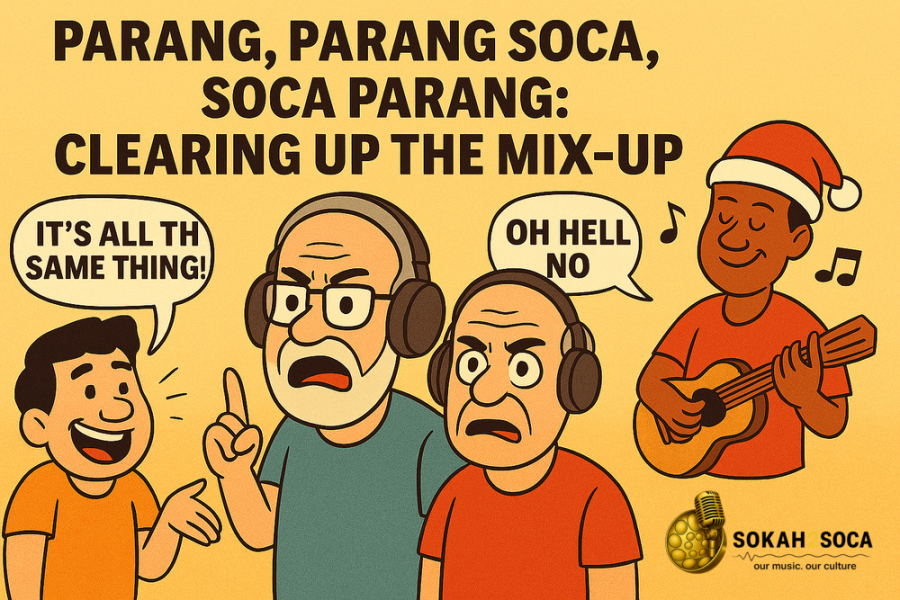
It turns out, there are clear distinctions—and they matter if we want to respect the traditions and evolution of the music. Too often, misinformation becomes repeated until it feels like fact, and that’s how confusion spreads. I've outlined the distinctions in concise bullet points below to ensure clarity and maintain everyone's focus. Think of the information as a quick guide to avoid falling into the trap of misunderstanding these genres that are so deeply tied to our culture.
Parang
- The genre, rooted in Venezuelan and Spanish traditions, was introduced to Trinidad & Tobago.
- The song incorporates cuatro, mandolin, guitar, box bass, and maracas.
- Sung in Spanish or English with themes of Christmas, family, and festivity.
- The rhythm is folkloric, acoustic, and storytelling-driven.
- It is the mother genre from which the hybrids evolved.
Parang Soca
- The traditional parang rhythm drives the song, while modern electronic instruments, such as the bass guitar and keyboards, add a soca flavor.
- The vibe is festive, yet it still retains the essence of parang at its core.
- For example, Scrunter’s "Madame Jeffrey" and Crazy’s "Muchacha" showcase a parang rhythm infused with the brightness of soca.
Soca Parang
- Here, Soca is the dominant rhythm.
- The bassline and groove are unmistakably soca, with parang instruments and themes added for seasonal flavor.
- Lyrics often focus on Trini Christmas staples (ham, sorrel, and black cake) but are delivered in soca’s upbeat style.
- Example: Baron’s Spanish Woman or Machel Montano’s Soca Santa—Soca first, Parang second.
At the end of the day, Parang, Parang Soca, and Soca Parang each carry their identity, shaped by history, rhythm, and cultural intent. The confusion often comes from casual conversations where the terms are tossed around interchangeably—but as Kenny Phillips reminded me, the distinctions are real and worth preserving.
By keeping these differences clear, we not only honor the artistry of the musicians who shaped them but also protect the richness of Trinidad and Tobago’s musical heritage. So the next time someone says, “There’s no difference,” you’ll know better—and hopefully, you’ll help spread the word that these genres deserve to be understood on their terms.